
How Background Screening Is Shaping Smarter Hiring Decisions in light of 2026 hiring trends
Introduction
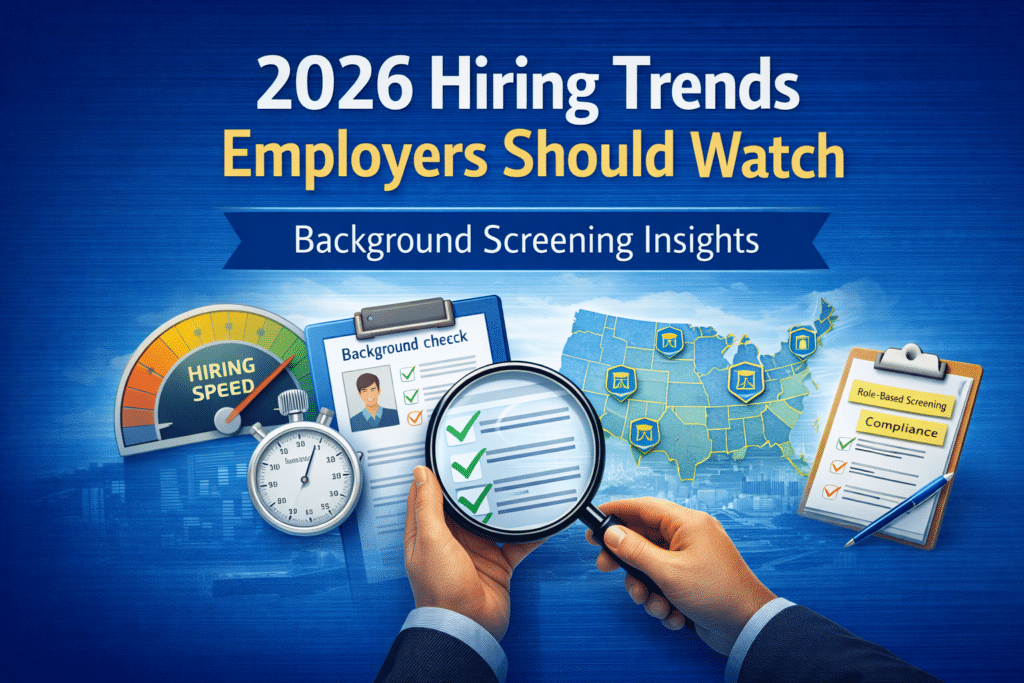
Hiring in 2026 looks very different than it did just a few years ago. Employers are under pressure to hire faster, provide a better candidate experience, and navigate an increasingly complex web of state and local regulations — all without increasing risk.
Understanding current hiring trends, especially as they relate to background screening and future trends in hiring for 2026, helps employers stay competitive while remaining compliant. Below are the key trends shaping hiring decisions in 2026 and what employers should do now.
Trend #1: Speed Is Now a Competitive Advantage
Candidates expect faster hiring decisions than ever before. Lengthy or unclear screening processes often result in:
- Candidate drop-off
- Lost talent to faster-moving competitors
- Frustration among hiring managers
In 2026, employers are prioritizing:
- Digital consent and authorization
- Earlier coordination between HR and hiring managers
- Screening workflows that reduce manual follow-up
What this means:
Speed doesn’t mean skipping steps — it means eliminating inefficiencies amid 2026 hiring strategies.
Trend #2: Transparency Builds Candidate Trust
Today’s candidates want to understand:
- What information is being collected
- How long the background check will take
- What happens if an issue appears on a report
Employers who communicate clearly throughout the screening process see:
- Higher completion rates
- Fewer disputes
- Improved employer brand perception
Transparency is no longer optional — it’s expected and crucial for 2026 hiring strategies.
Trend #3: Local Hiring Laws Are Driving Process Changes
State and city-level regulations are expanding faster than federal guidance. Employers must now account for:
- Jurisdiction-specific timing rules
- Restrictions on criminal history use
- Additional notice and documentation requirements
A screening process that works in one location may not be compliant in another; ensuring compliance aligns with 2026 hiring trends.
What this means:
Employers are relying more heavily on screening partners that actively monitor and adapt to local requirements.
Trend #4: Role-Based Screening Is Replacing “One-Size-Fits-All”
Employers are moving away from blanket screening packages in favor of:
- Role-specific screening criteria
- Risk-based decision-making
- Screening aligned with job duties and access levels
This approach helps:
- Reduce unnecessary screening
- Improve turnaround times
- Support defensible hiring decisions, crucial for 2026 strategies.
Trend #5: Compliance Is Becoming a Shared Responsibility
In 2026, background screening compliance isn’t handled by HR alone.
Successful employers are:
- Training hiring managers on screening basics
- Documenting hiring decisions consistently
- Partnering with screening providers who offer guidance, not just reports
Compliance failures often stem from miscommunication — not intent, which is important when considering hiring trends in 2026.
What Employers Should Do Now
To stay ahead in 2026, employers should:
- Review hiring and screening workflows for efficiency
- Update disclosures and consent processes
- Ensure screening packages align with job roles
- Train internal teams on compliance expectations
- Work with a screening partner that monitors regulatory changes
How The Screening Source Supports Smarter Hiring
At The Screening Source, we help employers adapt to evolving trends by providing:
- Efficient, compliant background screening solutions
- Guidance on role-based screening strategies and considering 2026 hiring trends.
- Support navigating state and local hiring requirements
Our goal is to help you hire confidently — without unnecessary delays or risk.
