
When people hear the term credit, they usually think about personal credit scores. But business credit plays an equally important—often more critical—role in financial decision-making.
Whether you’re extending payment terms, signing a lease, approving a vendor, or entering a partnership, business credit helps answer one essential question:
Can this company be trusted financially?
What Is Business Credit?
Business credit reflects a company’s financial behavior and risk profile. It shows how a business manages its obligations, pays vendors, and handles legal or financial challenges.
Unlike consumer credit, business credit is tied to the company itself, not an individual’s personal credit score. It is typically built using factors such as:
- Payment history with vendors and lenders
- Credit risk ratings and scores
- Public records like liens, judgments, and bankruptcies
- Collections activity
- Business size, age, and industry
- Corporate registration and ownership details
This information is compiled by commercial data providers and used by landlords, lenders, vendors, and partners to evaluate risk.
Why Business Credit Matters More Than You Think
Many organizations take the time to screen individuals—but skip verifying the business behind the deal.
That’s a costly mistake.
A Business Can Look Legit and Still Be High Risk
A company may appear established on the surface while quietly struggling with:
- Chronic late payments
- Active liens or judgments
- Collections activity
- Legal disputes
- Financial instability
Business credit reports help uncover these issues before they affect your bottom line.
The Real-World Risks of Ignoring Business Credit
Failing to check business credit can lead to:
- Late or missed payments
- Broken contracts
- Costly legal disputes
- Tenant or vendor defaults
- Increased financial exposure
In many cases, these risks were visible upfront—but went unchecked.
How Business Credit Is Different from Personal Credit
Business credit works differently than consumer credit in several key ways:
- There is no single “FICO score” equivalent
- Multiple risk ratings and indicators are used
- Public records play a larger role
- Reports often can be accessed without written authorization
- The focus is on payment behavior and financial stability, not personal debt
This makes business credit especially useful for due diligence and risk assessment.
When Should You Check Business Credit?
Running a business credit report is especially important when you are:
- Extending net payment terms
- Leasing commercial property
- Approving vendors or suppliers
- Onboarding franchisees or partners
- Performing due diligence on a new business relationship
If the decision involves financial exposure, business credit should be part of your process.
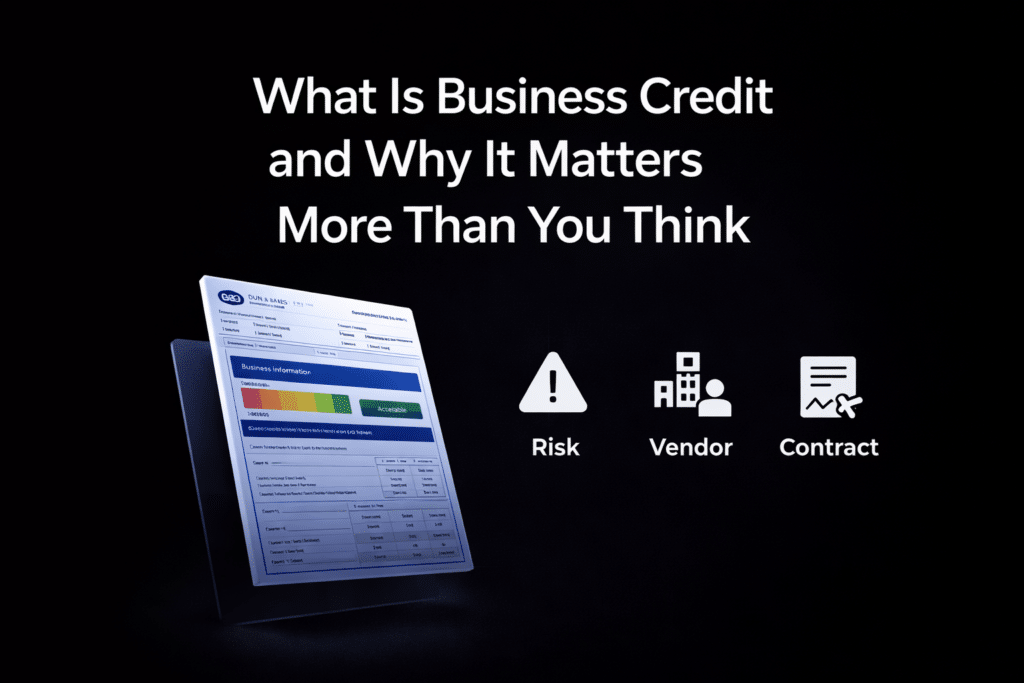
What a Business Credit Report Can Reveal
A comprehensive Business Credit Report may include:
- Business identity and verification
- Credit risk score and rating
- Payment history and trends
- Liens, judgments, and bankruptcies
- Collections activity
- UCC filings and legal records
This information helps you make decisions based on facts—not assumptions.
Why a Business Credit Report Is Worth It
Many businesses hesitate to run a business credit check because they assume it’s expensive or complicated.
In reality, the cost of not checking is far higher.
A single late payment, default, or bad contract can cost thousands.
A Business Credit Report costs far less—and can prevent those issues altogether.
Final Thoughts
Business credit isn’t just for banks or lenders. It’s a practical risk-management tool for any organization making financial decisions.
Before you commit to a contract, approve a vendor, or extend credit, take a few minutes to verify the business behind the deal.
Know who you’re doing business with—before it costs you.
