
Why modern organizations are moving beyond one-time checks — and whether your business should too.
Introduction
For decades, employment background checks followed a simple pattern:
✔ Conduct a one-time screening before hire
✔ Make a decision
✔ Move on
But in today’s fast-moving regulatory, safety, and risk environment, that approach is quickly becoming outdated.
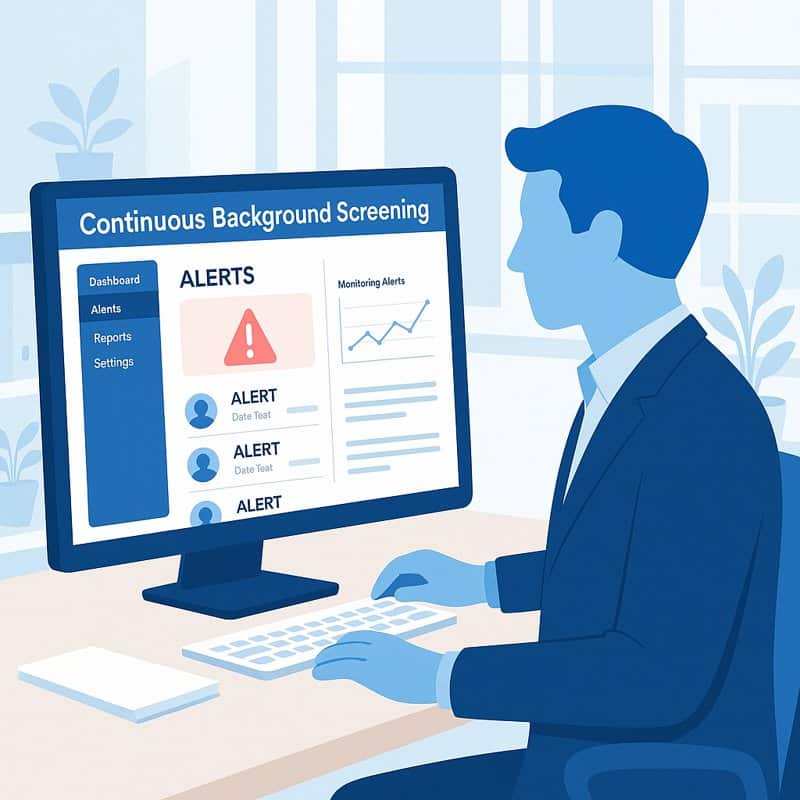
Enter continuous background screening — an emerging industry standard where employee records are automatically monitored on an ongoing basis. If new, relevant information appears (such as a recent conviction or license suspension), the employer receives an alert in real time.
This shift has major implications for businesses of all sizes.
From HR managers at growing companies, to small businesses, to nonprofits, to highly regulated industries like healthcare, transportation, and finance, the question is the same:
Is continuous background screening right for your organization?
At The Screening Source, LLC, we help employers navigate these evolving practices with accuracy, compliance, and fairness. This guide explores what continuous screening is, why it matters, and how to evaluate whether it aligns with your hiring and risk-management strategy.
1. What Is Continuous Background Screening?
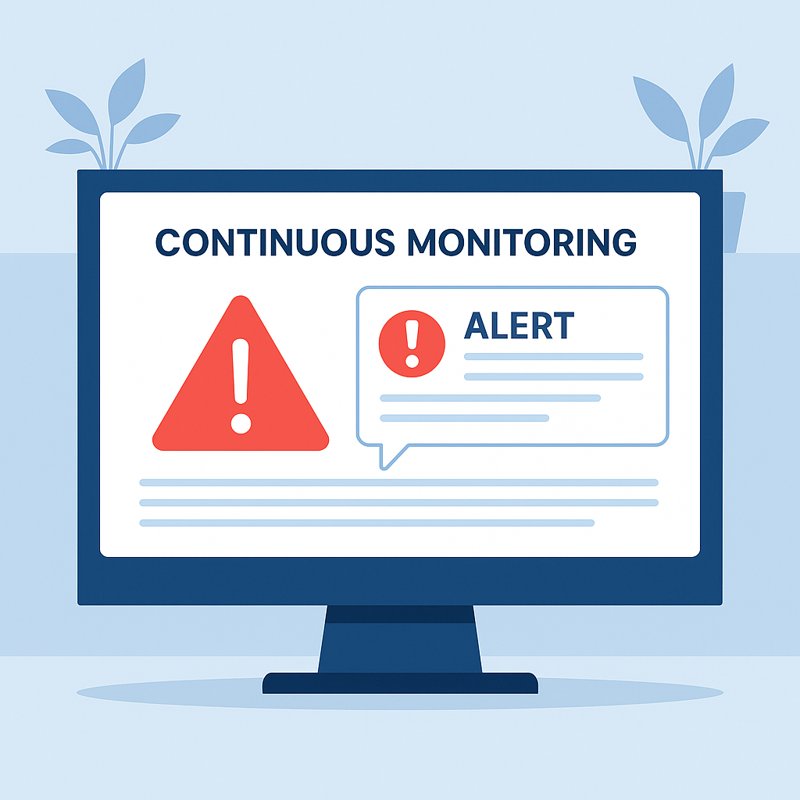
Continuous background screening is the practice of monitoring employee records on an ongoing basis instead of relying solely on a one-time pre-employment check.
It typically includes monitoring for:
- New criminal convictions
- Arrest or court activity (in states where legally allowed)
- License suspensions or expirations
- Sanction lists (healthcare, financial, etc.)
- Compliance-sensitive offenses related to job duties
The goal is to identify potential risks or compliance issues as soon as they occur, rather than months or years later.
Why this matters:
A traditional background check is only accurate on the day it’s run.
Continuous screening ensures employers maintain visibility throughout employment — especially for sensitive roles.
2. Why Continuous Screening Is Growing Rapidly

Several major trends are driving adoption across industries.
a. Increased Regulatory Pressure
Industries such as:
- Healthcare
- Transportation (FMCSA)
- Financial services
- Education and childcare
are seeing tighter oversight. Regulators expect employers to monitor credentials and criminal activity more closely.
b. Rise in Remote & Distributed Workforces
Companies hiring remotely across states face:
- Varying compliance rules
- Higher trust requirements
- Greater challenges tracking employee changes
Continuous screening helps maintain consistent standards everywhere.
c. Higher Workplace Safety Expectations
Organizations want to reduce incidents and create safer environments.
Continuous monitoring offers early warning signals.
d. Litigation Trends
Lawsuits against employers for negligent hiring/retention continue to rise.
Courts increasingly emphasize ongoing diligence, not just pre-hire checks.
e. Technology Has Made It Easy
Automated, real-time data sources now make continuous monitoring:
- Fast
- Affordable
- Seamless
Once expensive and labor-intensive, it is now a practical option for businesses of all sizes.
3. Top Benefits of Continuous Background Screening
1. Improved Workplace Safety
Employers can quickly identify high-risk behavior that may jeopardize safety.
2. Enhanced Compliance
Industries with licensing, clearance, or regulatory requirements benefit from automated alerts when an employee no longer meets compliance standards.
3. Reduced Legal Liability
By showing ongoing due diligence, employers reduce exposure to negligent hiring or retention claims.
4. Better Protection of Customers & Vulnerable Populations
Organizations in education, healthcare, nonprofits, and caregiving can respond faster to issues that affect trust and safety.
5. More Reliable Workforce Data
Instead of outdated records, you receive current, verified information the moment something changes.
6. Faster HR Decision-Making
Real-time alerts allow HR to take action quickly — instead of discovering issues months later during an annual rescreen.
4. Potential Challenges to Consider
Continuous screening offers strong benefits, but it may not be ideal for every organization.
Here’s what to consider:
a. FCRA Compliance Requirements
Under the Fair Credit Reporting Act, continuous screening still qualifies as a consumer report — meaning:
- You must disclose the monitoring to employees
- Employees must provide written authorization
- You must follow the adverse action process if decisions are made based on results
The Screening Source ensures all continuous monitoring programs remain fully FCRA-compliant.
b. Employee Privacy Concerns
Some employees worry continuous checks feel intrusive.
Clear communication and transparent policy writing are essential.
c. Cost Considerations
Continuous screening is more expensive than single pre-hire checks, but far more affordable than periodic full rescreens.
d. Internal HR Readiness
Your team must be prepared to:
- Evaluate alerts
- Document decisions
- Follow adverse action procedures
- Update personnel files
e. Data Accuracy & Vendor Quality
Not all monitoring products are equal.
Poor-quality data = bad decisions + legal risk.
Always choose a certified Consumer Reporting Agency (CRA) like The Screening Source.
5. Who Benefits Most From Continuous Background Screening?
A. Highly Regulated Industries
Industries where compliance is critical:
- Healthcare
- Transportation & logistics
- Financial services
- Government contractors
- Education & childcare
- Security services
Often require continuous screening for licensing or regulatory purposes.
B. Businesses With Public-Facing or Safety-Sensitive Roles
This includes:
- Customer service
- Field technicians
- Property management
- Hospitality
- Home services
- Retail
These jobs carry higher liability if something goes wrong.
C. Nonprofits & Community Organizations
Nonprofits must safeguard:
- Children
- Seniors
- Volunteers
- Donors
- Vulnerable individuals
Continuous monitoring helps protect the people they serve.
D. Small Businesses
Even small businesses face risk from a single negligent retention case.
Continuous screening provides affordable protection.
E. Remote & Multi-State Employers
When employees operate across jurisdictions, monitoring increases consistency.
6. What Continuous Screening Does Not Include
Continuous monitoring is powerful — but it’s not a full substitute for everything.
It typically does NOT include:
- Full national criminal searches
- Employment verification
- Education verification
- Federal searches
- International checks
These are still run at pre-hire or during periodic rescreen cycles.
Continuous screening is an add-on, not a replacement.
7. Implementing Continuous Screening: Best Practices
If you’re considering continuous screening, follow these guidelines.
1. Update Your Background Check Policy
Include:
- What roles require monitoring
- What data is monitored
- Your adverse action procedure
- How notifications are handled
2. Obtain Employee Consent
The FCRA requires written authorization for ongoing checks.
3. Train Managers & HR Staff
Ensure your team understands:
- What alerts mean
- How to interpret them
- How to follow compliance steps
4. Use a Certified CRA
Avoid generic database products.
Work with accredited, compliant providers like The Screening Source.
5. Communicate Clearly With Employees
Transparency builds trust and reduces concerns.
6. Document Everything
- Alerts
- Review notes
- Decisions
- Final outcomes
Documentation protects your business in audits or lawsuits.
8. Is Continuous Screening Right for Your Company?
Evaluate these questions:
1. Do you operate in a regulated or safety-sensitive industry?
If yes → continuous screening is highly recommended.
2. Do employees work with vulnerable populations?
If yes → continuous screening adds essential protection.
3. Does your business carry high liability risk?
If yes → monitoring reduces legal exposure.
4. Do you want to strengthen compliance?
If yes → continuous screening helps meet FCRA, EEOC, and industry rules.
5. Are you prepared to act on alerts fairly and consistently?
If yes → you’re ready for implementation.
If you answered YES to 3 or more:
Your company will likely benefit significantly from continuous background screening.
Conclusion
Continuous background screening is quickly becoming the new standard for organizations that take safety, compliance, and risk mitigation seriously. While not every company needs it, many are finding that it provides powerful insight and peace of mind in an unpredictable world.
Whether you’re a large enterprise, a nonprofit, a small business, or a regulated industry, The Screening Source can help you determine if continuous screening fits your needs — and design a compliant, cost-effective solution tailored to your workforce.
Protect your workforce and strengthen your compliance strategy with continuous background screening.
📧 info@thescreeningsource.com
☎️ 860-591-5225
🌐 https://thescreeningsource.com
