
A complete guide for employers hiring remote employees across multiple states — balancing compliance, security, and operational efficiency.
Introduction
Remote work is no longer a trend — it’s the new standard. Businesses of every size now hire employees, contractors, and freelancers from all across the country (and sometimes the world). While this expands access to talent, it also introduces new challenges for background screening, identity verification, multi-state compliance, and risk management.
The truth is simple:
remote hiring requires a different approach to background checks.
Employers must navigate:
- Multiple state laws
- Digital identity verification
- Remote onboarding
- Higher fraud risks
- Cybersecurity concerns
- Nationwide court access
- FCRA compliance
- Operational efficiency
At The Screening Source, LLC, we help employers stay compliant and protected while hiring remotely, whether you are bringing on one remote employee or an entire distributed workforce.
This article breaks down everything employers need to know.
1. Why Background Checks Matter Even More With Remote Workers
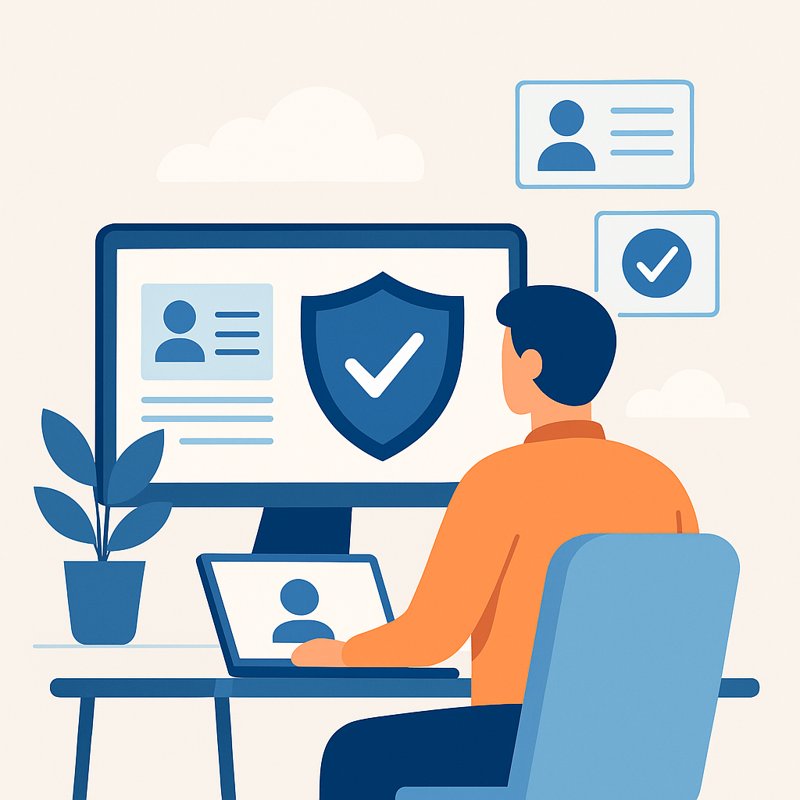
When employees work outside the office, employers lose many natural safeguards, including face-to-face supervision and on-site oversight. This makes background screening more essential — not less.
Key risks unique to remote workers:
- Identity fraud or misrepresentation
- Unauthorized access to sensitive data
- Cybersecurity threats
- Insider risk
- Lower visibility into behavior
- Difficulty validating work history or credentials
Remote employees often have access to:
- Customer information
- Company systems
- Financial data
- Proprietary tools
- Shared drives
- Cloud systems
Without proper screening, these vulnerabilities can lead to:
- Data breaches
- Insider attacks
- Financial fraud
- Reputational damage
- Compliance violations
A strong background screening program is your first line of defense.
2. Common Background Check Components for Remote Workers
While the core components are similar to on-site employees, remote hiring often includes additional steps.
Standard screening elements include:
- Nationwide criminal checks
- County-level criminal searches
- Identity verification
- SSN validation
- National sex offender search
- Address history trace
- Employment verification
- Education verification
- Multi-jurisdictional database checks
Additional screenings recommended for remote roles:
- Professional credential verification
- Credit checks (for financial positions)
- Sanctions lists (healthcare, finance, security)
- Continuous monitoring for high-risk positions
- Remote I-9 identity verification tools
These screenings catch issues like falsified credentials, cybercrime history, or identity manipulation — all of which can be more common in remote hiring.
3. Compliance Requirements for Remote Background Checks
Multi-state hiring creates complex compliance challenges.
Here’s what employers must understand.
a. FCRA Compliance
Regardless of employee location, the Fair Credit Reporting Act applies nationwide.
Employers must:
- Provide proper disclosure
- Obtain written authorization
- Follow adverse action procedures
- Use a compliant background check provider
- Share results upon request
- Maintain documentation
The Screening Source ensures every step meets FCRA guidelines.
b. Ban-the-Box and Fair Chance Laws (State + Local)
Different states and cities have their own rules regarding:
- When you may run the background check
- What information you may consider
- Restrictions on conviction records
- Individualized assessment requirements
This matters because the laws are based on the applicant’s state, not yours.
For example:
- California: strict limits on conviction consideration
- Colorado: Job Application Fairness Act restrictions
- New York: Article 23-A considerations required
- Philadelphia: strengthened Fair Criminal Record Screening Standards
- Illinois: strict adverse action rules
Employers hiring nationwide must keep up with these variations.
c. Salary History Bans
Many states prohibit asking about previous compensation.
Remote hiring increases the risk of unintentionally violating these rules.
d. Drug Testing Variations
Different states have:
- Marijuana laws
- Medical marijuana protections
- New York’s outright prohibition on pre-employment marijuana testing
- DOT testing requirements for regulated roles
Remote roles require carefully tailored testing policies.
4. Identity Verification — The #1 Challenge in Remote Hiring
When you hire in person, validating identity is simple:
A candidate shows up with their I-9 documents in hand.
But with remote employees, verifying identity becomes more difficult — and more critical.
Modern identity verification tools help prevent:
- Identity theft
- False identities
- SSN mismatches
- Synthetic identity fraud
- Manipulated government documents
The Screening Source integrates identity verification into remote background checks, improving accuracy and reducing risk.
5. Cybersecurity and Data Access Risks with Remote Employees
Remote employees often access sensitive systems from:
- Home networks
- Public Wi-Fi
- Personal devices
- Mobile hotspots
This introduces significant cybersecurity vulnerabilities.
Background checks help identify past:
- Fraud
- Theft
- Cybercrime
- Unauthorized access
- Data misuse
But employers must also combine screening with:
- Multi-factor authentication
- Role-based permissions
- VPN access
- Password policies
- Continuous monitoring
- Device management tools
Comprehensive screening + strong cybersecurity controls = maximum protection.
6. Operational Challenges in Remote Background Screening
Remote hiring may introduce delays or complications. Here’s how to avoid them.
a. Incomplete or inaccurate information
Candidates often input details manually.
Small errors create delays in processing.
b. County court delays
Some counties still rely on manual record searches.
c. Time zone differences
Scheduling verifications or follow-ups can take longer.
d. Remote I-9 verification challenges
Employers must use:
- Authorized agents
- Notaries
- E-Verify remote tools
e. Remote communication gaps
Candidates may be less responsive than in-person applicants.
The Screening Source solves these challenges with:
- Automated applicant portals
- Mobile-friendly onboarding
- Digital consent forms
- Real-time status tracking
- Automated reminders
- Multi-state compliance workflows
7. Tailoring Background Checks to Remote Job Roles
Not all remote roles carry the same risks. Employers should adjust screening intensity based on job duties.
Low-risk remote roles
- Customer support
- Virtual assistants
- Data entry
- Content production
Recommended:
- Standard criminal search
- SSN validation
- Employment verification
Moderate-risk remote roles
- Sales
- Accounting support
- Client-facing positions
Add:
- Credential checks
- Professional reference checks
High-risk remote roles
- Finance
- Healthcare administration
- IT support
- Security-sensitive roles
- Executive or senior management
Add:
- Continuous monitoring
- Credit checks (where permissible)
- Federal criminal checks
- Sanctions lists
- Cybersecurity assessments
The Screening Source helps employers build tailored screening packages based on job responsibilities.
8. Continuous Monitoring for Remote Workers
Remote employees often operate with high autonomy and minimal oversight.
Continuous monitoring helps detect:
- New criminal activity
- License suspensions
- Sanctions or compliance violations
This protects your business throughout the employment lifecycle — not just at hire.
9. Best Practices for Background Checks in a Remote Workforce
To maintain compliance and reduce risk, employers should follow these key practices:
✔ Maintain a written screening policy
Consistent, structured processes reduce discrimination risk.
✔ Use digital identity verification
Prevents data mismatches and fraud.
✔ Follow FCRA requirements every time
Disclosures and adverse action steps are mandatory.
✔ Stay updated on multi-state regulations
Laws vary significantly by location.
✔ Use a reputable background screening provider
Quality and accuracy matter more in remote environments.
✔ Combine screening with cybersecurity protocols
Protect sensitive digital assets.
✔ Document every step
This protects employers in court or audits.
Conclusion
Remote hiring brings new flexibility and access to talent — but it also brings new compliance responsibilities, identity verification challenges, and cybersecurity risks. Employers who understand these challenges and partner with a trusted background screening provider can hire confidently and safely, no matter where their talent is located.
The Screening Source helps employers streamline remote hiring through accurate, fast, and fully compliant background checks — tailored for a nationwide workforce.
Build a safer, stronger remote workforce with The Screening Source.
📧 info@thescreeningsource.com
☎️ 860-591-5225
🌐 https://thescreeningsource.com
