
Common Mistakes That Increase Hiring Risk
Introduction
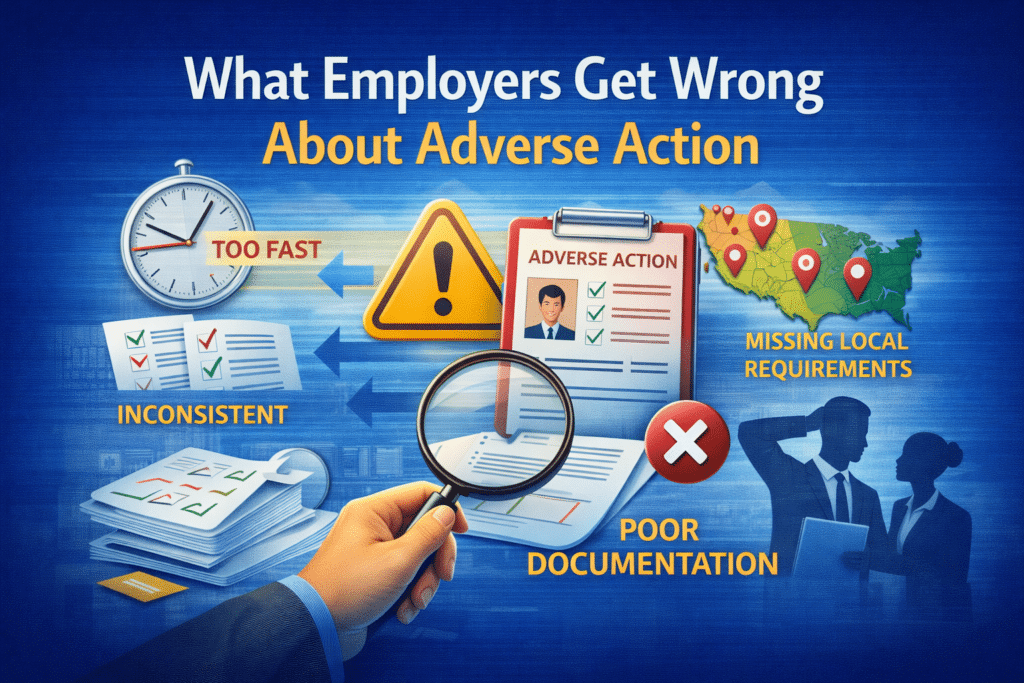
Adverse action is one of the most critical — and most misunderstood — steps in the background screening process. Many employers believe they are handling adverse action correctly, only to discover gaps that expose them to compliance risk.
In 2026, as hiring regulations continue to expand and candidate awareness grows, employers must ensure adverse action procedures are handled consistently, fairly, and in full compliance with applicable laws.
What Is Adverse Action in Background Screening?
Adverse action occurs when an employer makes a negative employment decision — such as rescinding a job offer or denying employment — based in whole or in part on information found in a background check.
Federal law, along with many state and local laws, requires employers to follow specific steps before making a final adverse decision.
Mistake #1: Moving Too Quickly
One of the most common adverse action mistakes is acting too fast.
Employers sometimes:
- Skip the pre-adverse action step
- Fail to provide required waiting periods
- Make decisions before the candidate has a chance to respond
Adverse action is a process, not a single notice. Rushing it increases legal and reputational risk.
Mistake #2: Inconsistent Application Across Departments
Another frequent issue is inconsistency.
Examples include:
- Different hiring managers applying different standards
- Inconsistent documentation
- Varying timelines depending on role or department
Consistency is essential to demonstrating fair and defensible hiring practices.
Mistake #3: Confusing Federal, State, and Local Requirements
Many employers assume federal requirements alone are sufficient.
In reality:
- State and local laws may impose additional notice requirements
- Waiting periods may vary by jurisdiction
- Certain records may be restricted or prohibited from consideration
Failing to account for location-specific rules is a growing compliance risk.
Mistake #4: Poor Documentation
Documentation gaps are a common weakness.
Employers should maintain:
- Copies of notices sent
- Dates and timing of communications
- Records of individualized assessments
- Candidate responses, if any
Proper documentation supports compliance and protects employers in the event of a dispute.
Mistake #5: Treating Adverse Action as a Vendor Responsibility
Some employers assume their background screening provider handles adverse action automatically.
While providers may supply reports or tools, the employer is ultimately responsible for:
- Making employment decisions
- Sending notices
- Ensuring compliance with applicable laws
Understanding roles and responsibilities is critical.
What Employers Should Do Instead
To reduce risk, employers should:
- Standardize adverse action procedures
- Train HR teams and hiring managers regularly
- Confirm applicable state and local requirements
- Document every step of the process
- Partner with screening providers that offer compliance guidance
Why Getting Adverse Action Right Matters
Adverse action isn’t just about compliance — it’s about fairness, transparency, and trust.
Handled correctly, it:
- Protects employer liability
- Respects candidate rights
- Supports defensible hiring decisions
- Reinforces your employer brand
How The Screening Source Supports Compliant Hiring
At The Screening Source, we help employers understand and manage adverse action by:
- Providing guidance on compliance requirements
- Supporting consistent screening workflows
- Helping clients navigate complex hiring regulations
If you have questions about adverse action or would like help reviewing your process, our team is here to help.
